
For Marx, surplus value is anything that management and supervisors took for themselves from the value of a product. So say a company sells 500 apples for $1 each. The managers and supervisors may take $50, the laborers may take $25, and the other $375 were used to pay for land and capital equipment like water, soil, and other equipment needed to raise the apples. Marx argued that the supervisors and managers took that extra $50 even though they did nothing to contribute to the value of the product. This $50 is the surplus value built into the price of the apples.
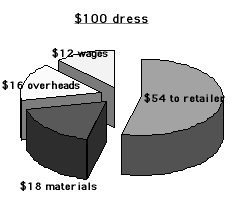
This is an image from a Communist website that shows exactly what I described above. In this case, the surplus value is $54. Marx argued that the retailers did not deserve that money because they did not do any work. Marx, as with most of his analysis, falls flat under scrutiny.
First, the critique of surplus value is only valid if we assume that the management and supervisors do not do anything. As we know, this is nonsense. These people organize labor so that it is more productive and efficient. This allows the workers to produce more for their labor. Furthermore, we have to consider that surplus value also goes to investors, and investors provide the capital that furnish a job. After all, without the money that was invested up front for the seeds and the soil and the water, then the employee would not even have a job.
So when people talk about things like a fair wage, they use the surplus value argument as justification. Just remember when discussing this topic with Communists that investors and management are important and provide a valuable service. This is all it takes to dismiss the infantile notion that the management steals from the laborers, nevermind the fact that laborers agree to work for these wages. If they thought that they could make more without the management stealing from the value, then they would be working for themselves.
Related Articles
How Can Goods be Allocated Without a Price System?
Free Trade and Protectionism: Spontaneous Order Always Wins Out
Why Wisconsin is the Future of Labor Unions in the United States


